Have you ever found yourself spending too much time manually recreating charts in Microsoft Word that you’ve already created in Excel? Fear not, because we have the ultimate time-saving solution for you! In this article, we will show you how to copy a chart from Excel to Word using several methods.
With these techniques, you can effortlessly transfer your charts from Excel to Word in just a matter of seconds. So, let’s dive into the step-by-step guide on how to copy a chart from Excel to Word and streamline your work process!

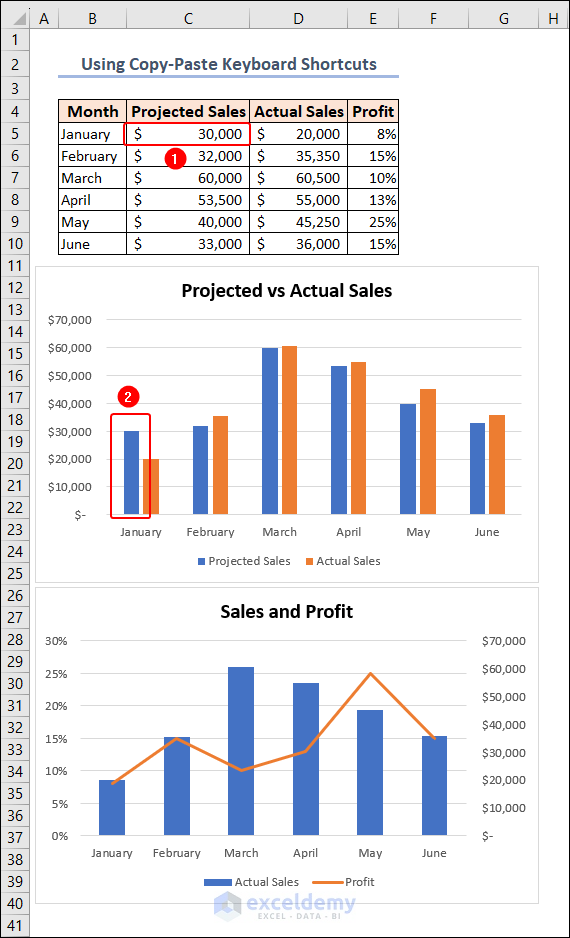
For ease of understanding, we are working with Monthly Sales Insights. This dataset includes the Month, Projected Sales, Actual Sales, and Profit under columns B, C, D, and E respectively. To gain a clearer understanding of the data, we have included several charts generated from this dataset. One chart provides a comprehensive view of Projected Sales vs Actual Sales, while another offers a detailed perspective on Sales and Profit.
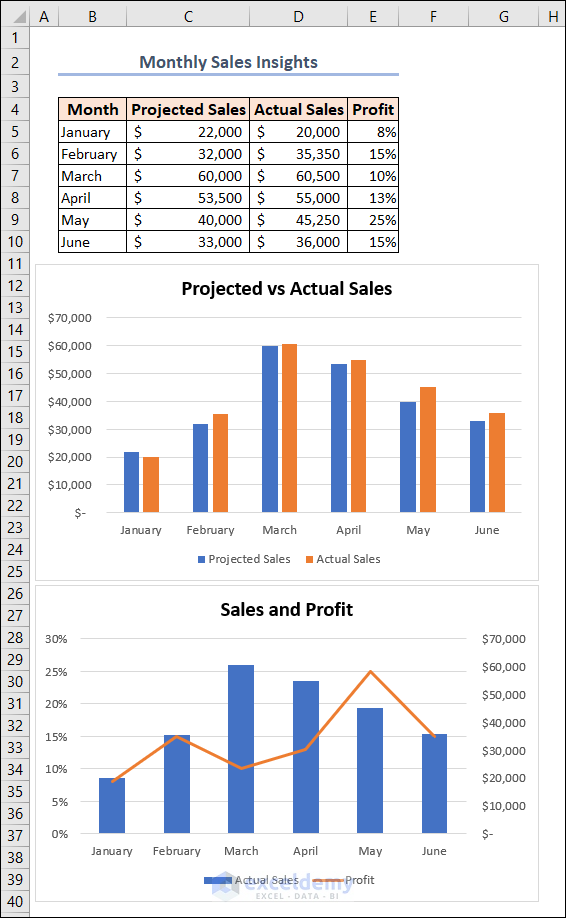
Not to mention, here, we have used the Microsoft Excel 365 version; you may use any other version according to your convenience. Please leave a comment if any part of this article does not work in your version.
1. Copying a Chart from Excel and Link It to Word
Linking a chart from Excel to Word allows for automatic updates to the chart in Word whenever changes are made to the original chart in Excel.
1.1 Use Copy-Paste Keyboard Shortcuts for Faster Execution
We have shown the simplest and most effective method at the very beginning. So that you don’t need to go through the following methods when your purpose is fulfilled. Here, we have used the Copy-Paste feature of office software.
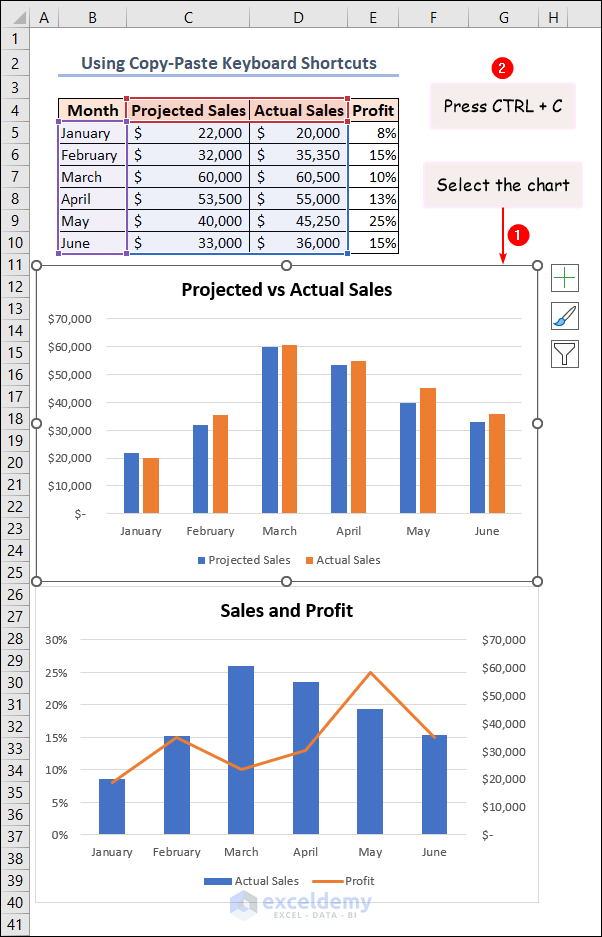
- Click anywhere on the chart that you want to import to Word. Simply, it selects the chart.
- Then, press CTRL + C together to copy the chart in Excel.
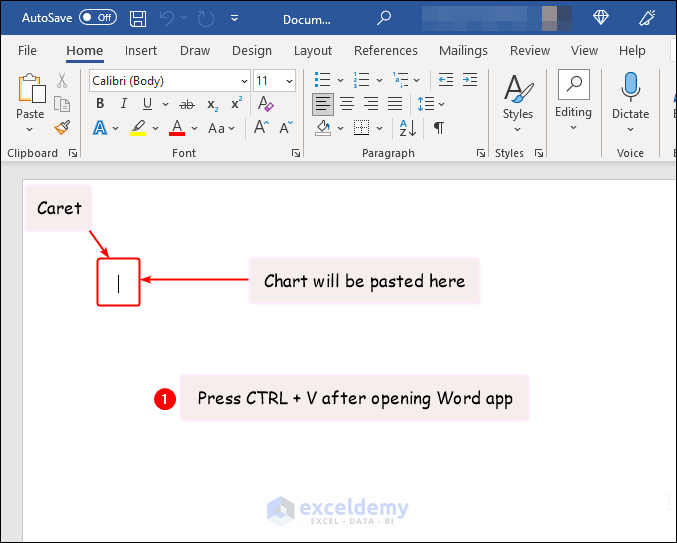
- After that, open the Word app and take a blank document. By default, you will see the caret (the blinking vertical line) at the top left side of the page.
- Press CTRL + V to paste the chart here.
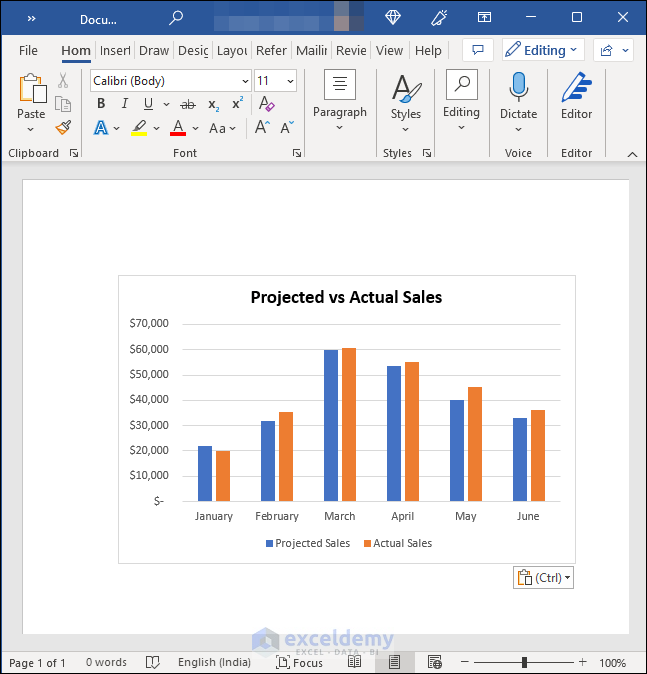
Absolutely! The chart has been successfully pasted into the Word document.
- Now, get back to the Excel worksheet and change any value in the dataset which is connected to the chart. Here, we changed the value of Projected Sales for January month to $30,000.
As a result, the column for this data was also transformed. Actually increased a bit in height according to the value.
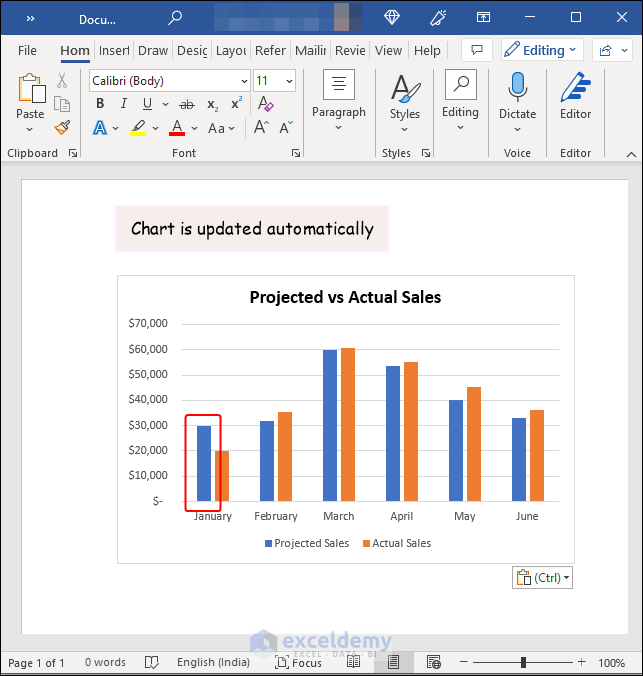
- In a moment, return to the doc file and see the change in the chart there.
Yes, it’s happening. This has been changed automatically.
Read More: How to Export Data from Excel to Word
1.2 Utilize Different Paste Options
You have the option to select various Paste options when copying a chart from Excel to Word. These options allow you to determine the manner in which the chart is pasted into your Word document.
- Follow the steps described in Method 1.1 to copy the chart in Excel.
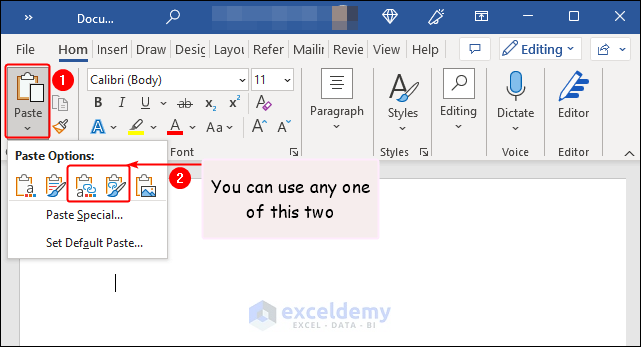
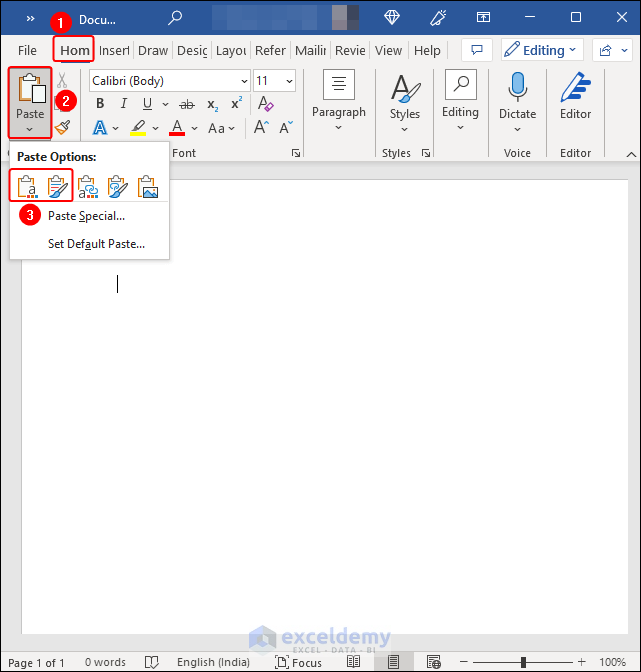
- In the Word app, click on the Paste drop-down icon.
- From the Paste Options, you can choose either of these two highlighted options in the following image. One is Use Destination Theme & Link Data, and the other one is Keep Source Formatting & Link Data.
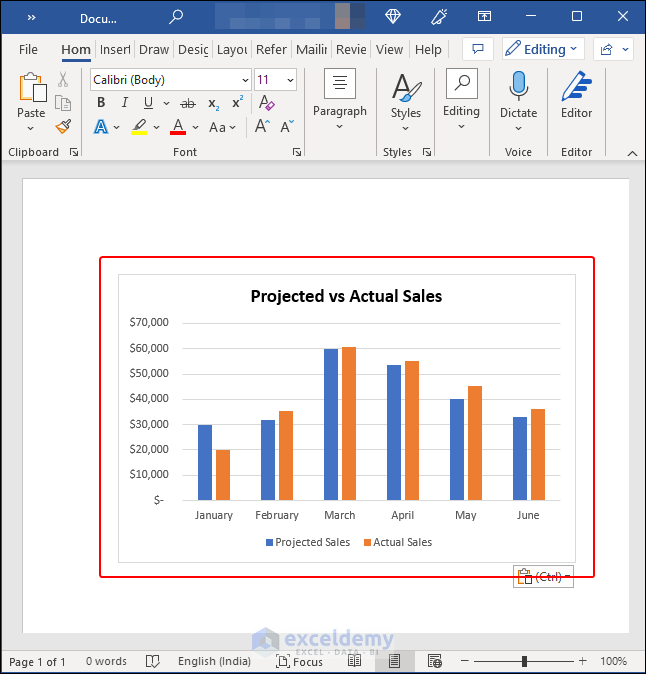
We can see the chart now in Word.
1.3 Pasting as Microsoft Office Graphic Object with Editable Data
By pasting a chart as a Microsoft Office Graphic Object with Editable Data, you can keep the chart’s formatting intact and modify its data directly in the Word document. This feature is particularly handy when you need to update the chart in real time because any changes made to the chart in Excel will automatically be updated in the Word document as well.
- Firstly, follow the steps described in Method 1.1 to copy the chart in Excel.
- In the Word app, click on Home >> Paste >> Paste Special.
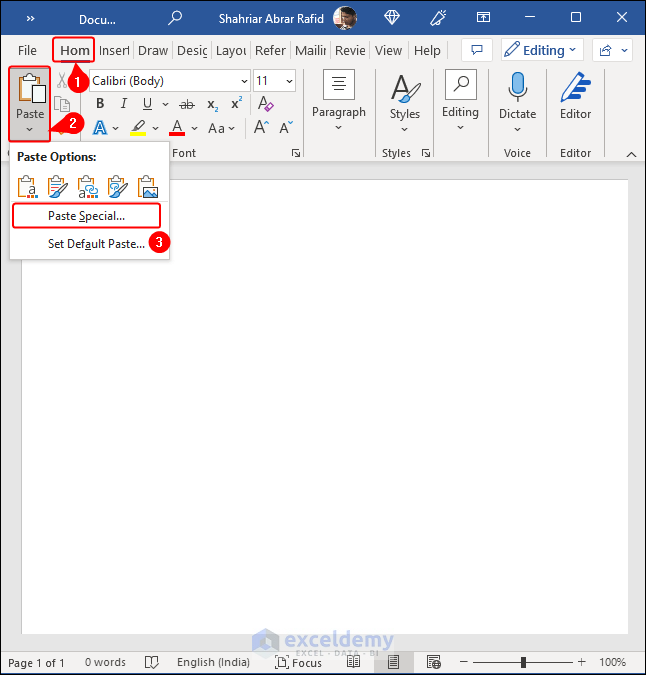
It’ll open the Paste Special dialog box.
- Now, click on the radio button beside the Paste link option and select Microsoft Office Graphic Object as an option and tap OK.
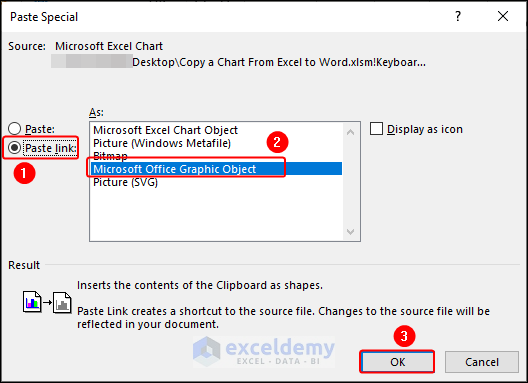
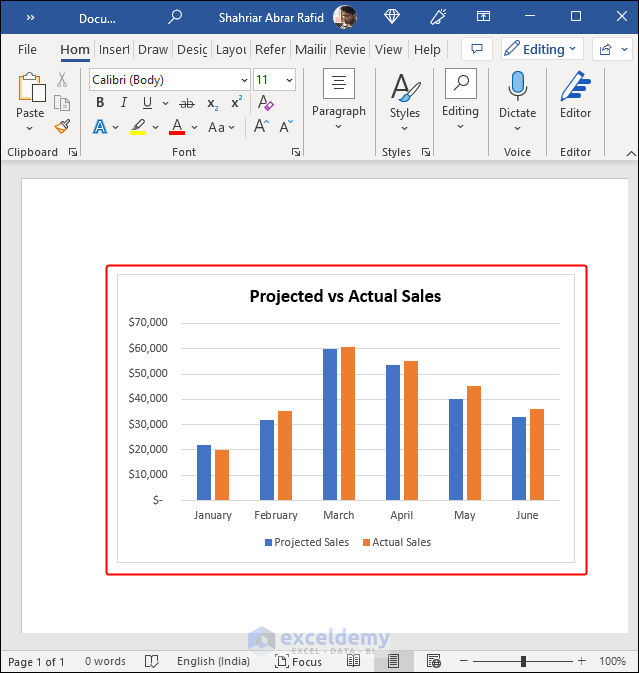
Without a doubt, Excel copied the chart to Word.
2. Copying a Chart from Excel and Embed It into Word
Embedding a chart copied from Excel into a Word document can enhance its visual appeal and make it easier to reference the data within the chart. It is not linked to the original Excel data and therefore is not auto-updateable.
- Follow the steps provided in Method 1.1 to copy the chart from Excel.
- Open the Word app and select Home >> Paste. Then, from the two paste options (Use Destination Theme & Embed Workbook and Keep Source Formatting & Embed Workbook), choose any one.
Indeed, Excel copied the chart from Excel to Word.
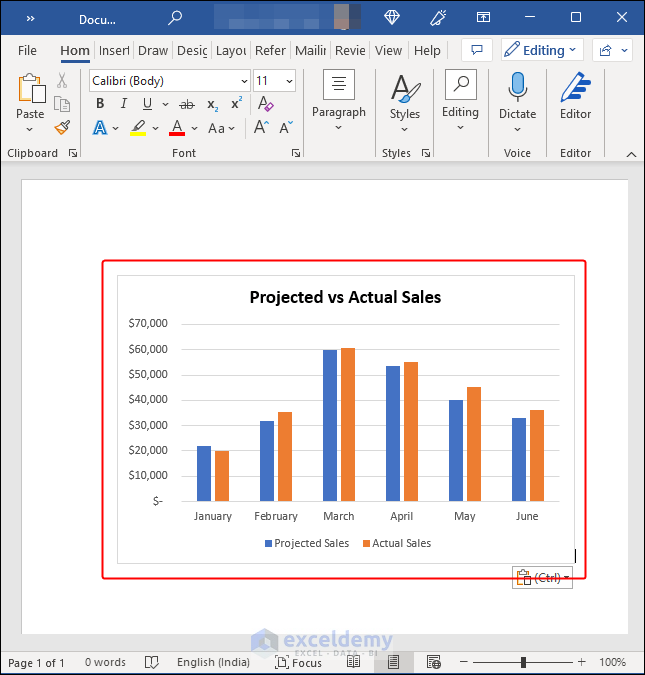
To test the variability, change a value in the Excel sheet. We changed the value of the Projected Sales for the month of January and there is a significant change in the chart in Excel.

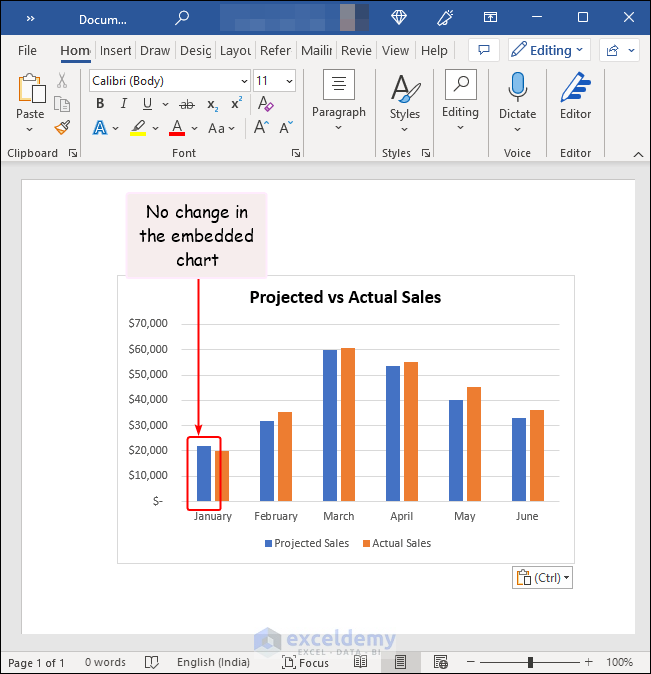
But if you navigate to the Word document, you can see no difference in the chart here. So, it didn’t get updated with the Excel sheet.
Read More: How to Copy from Excel to Word Without Losing Formatting
3. Copying a Chart as a Non-Editable Picture from Excel to Word
When you copy a chart from Excel to Word as a non-editable picture, it helps maintain the chart’s formatting and prevents any unintentional modifications within the Word document. This can be beneficial if you want to ensure the chart’s accuracy and visual appeal.
- Track the steps provided in Method 1.1 to copy the chart from Excel.
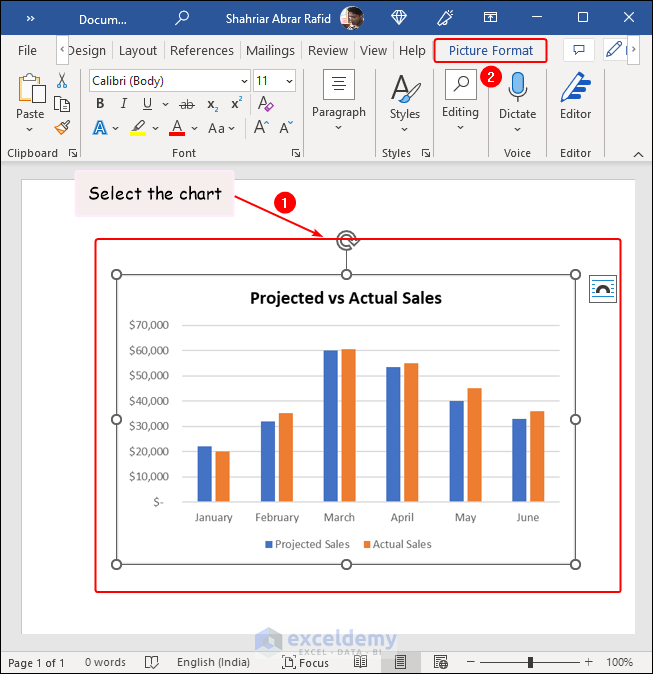
- Access Word from your computer and click Home >> Paste >> Picture.
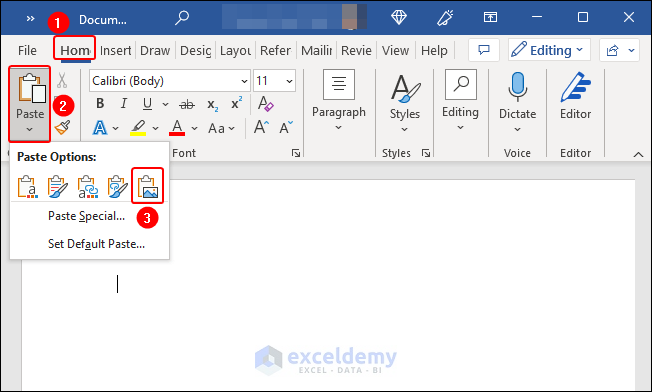
Instantly, you can see the chart available in your document.
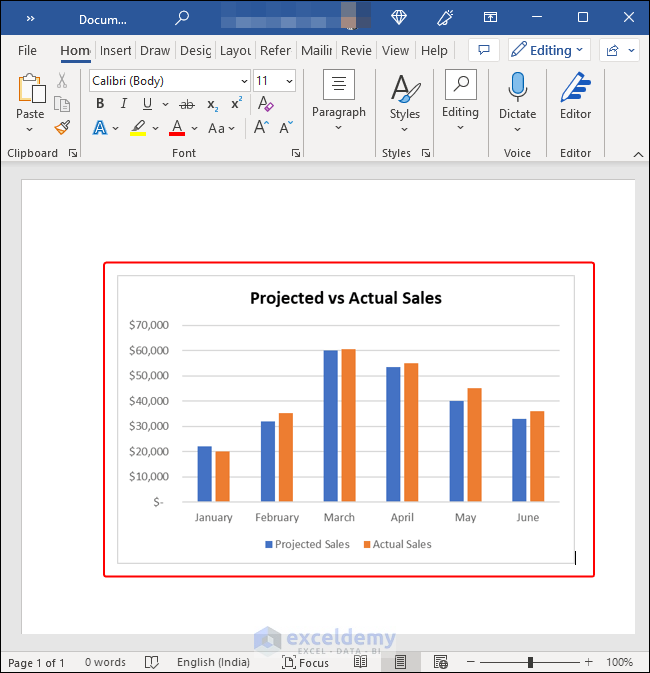
If you select or click on the chart in Word, you can find the Picture Format tab on the Ribbon. This means it’s in the picture format now.
Read More: How to Transfer Data from Excel to Word Automatically
Why Copying Charts from Excel to Word Is Useful?
When you copy charts from Excel to Word, it becomes beneficial for the following reasons:
- Presenting Data: If you created a chart in Excel to display data, you might want to include it in a report or presentation made in Word. Copying and pasting the chart from Excel into Word enables you to present data in a visually appealing manner.
- Saving Time: Copying and pasting from Excel to Word can save time instead of recreating the chart in Word. It eliminates the need to manually input data or create a new chart from scratch.
- Maintaining Data Accuracy: Copying the chart from Excel to Word ensures that the data remains linked to the original Excel file. As a result, any changes made to the Excel file are automatically reflected in the chart in Word. This guarantees that the data presented in your document is up-to-date and accurate.
- Customizing Chart: Excel provides various customization options for charts, such as changing the chart type, applying to format, and adding labels and titles. Copying the chart from Excel to Word enables you to retain all customizations made in Excel and create professional-looking documents.
How to Update Chart Manually
Sometimes your chart may not be updated automatically with the Excel file, though it’s linked to the source Excel file. In this case, you have to follow this step.
- Click on the chart to enable the tabs related to the chart.
- Then, navigate to the Chart Design tab and click on Refresh Data on the Data group of commands.
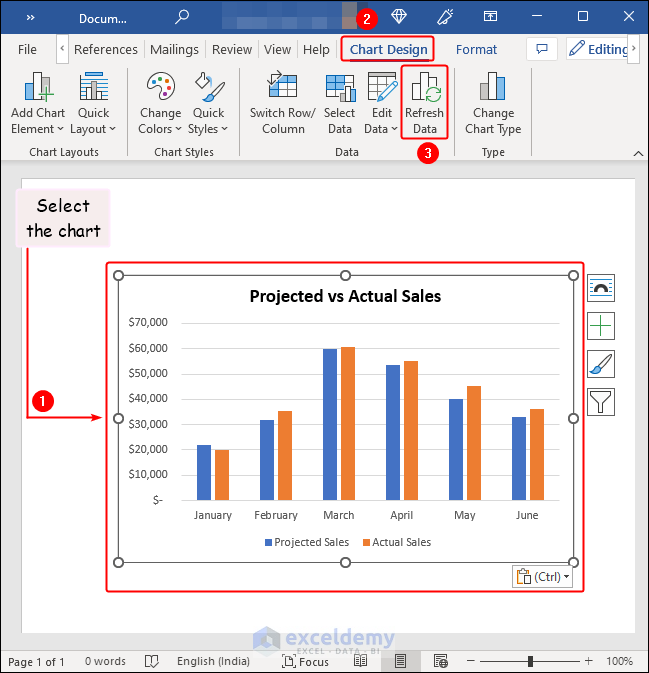
Simply, this will ensure that your chart is up-to-date and visually appealing. And you can see the change in the chart instantly.
How to Save Chart as Picture Using VBA Code
You can automate the task of exporting your Excel charts as pictures using a simple VBA macro if you need to do this regularly.
- Move to the Developer tab, then click on the Visual Basic button in the Code group.
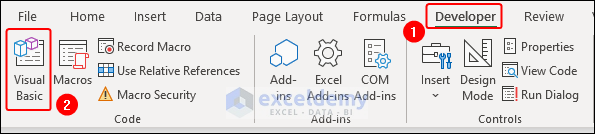
It launches the Microsoft Visual Basic for Applications window.
- Now, click the Insert tab and choose Module from the list. We get a small Module window to insert our VBA code.
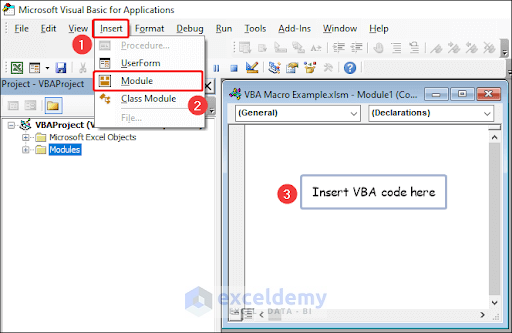
- Here’s the working code to do the task. Paste this code into the module.
Sub Save_Chart_As_Picture()
Dim chart_Title As String
chart_Title = ActiveChart.chartTitle.Text
ActiveChart.Export "D:/ExcelDemy/" & chart_Title & ".png"
End Sub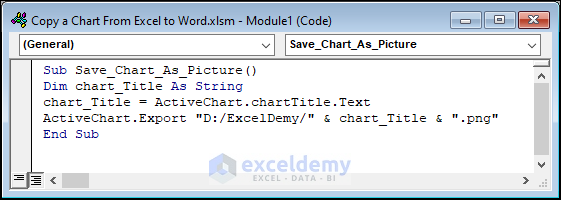
- Now, get back to the worksheet. Select the chart and go to Developer >> Macros.
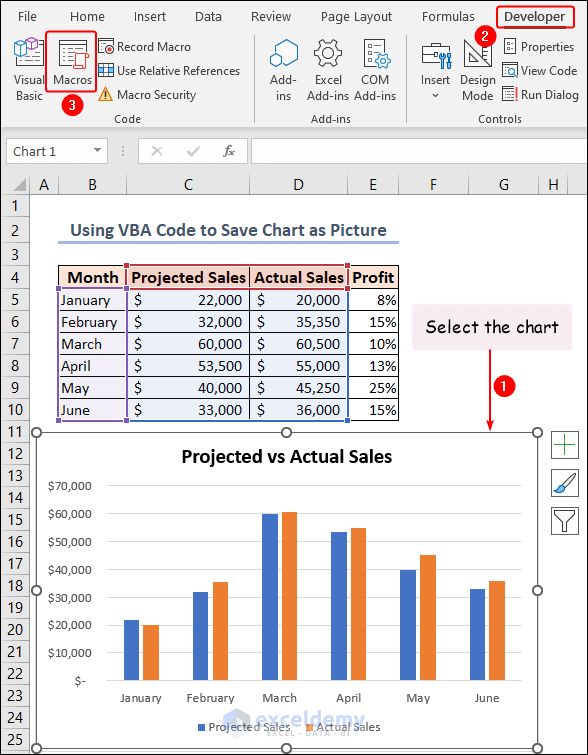
It will bring up the Macro dialog box.
- Select Save_Chart_As_Picture in the Macro name box and click on Run.
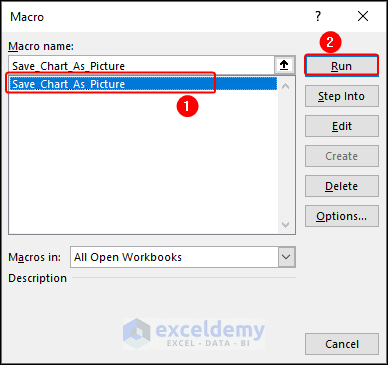
Magically, you can find the selected chart exported as a picture in your preferred directory.
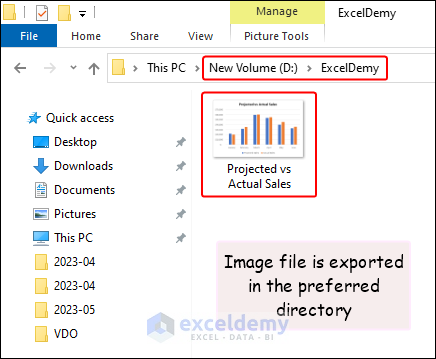
Moreover, You can export all the charts in a worksheet too. For this purpose, remaining on the active sheet you have to run this code.
Sub Save_All_Chart_of_Worksheet()

Dim chtObj As ChartObject
Dim chtTitle As String

For Each chtObj In ActiveSheet.ChartObjects
chtObj.Activate
chtObj.Select
chtTitle = chtObj.Chart.chartTitle.Text
chtObj.Chart.Export "D:/ExcelDemy/" & chtTitle & ".png"
Next chtObj

MsgBox "Export complete"

End Sub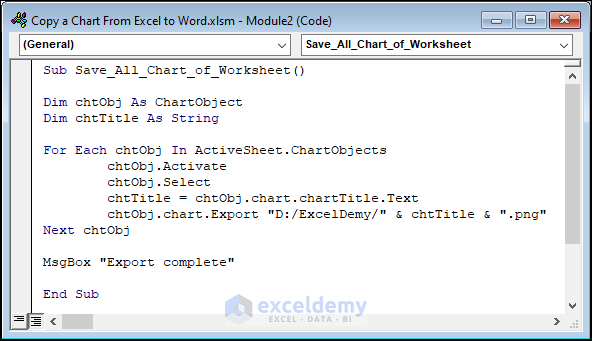
Excel will do the remaining work. All charts in the active sheet will be saved in the desired location on your PC.
How to Save All Charts in Excel Workbook as Images
Excel offers a feature to save all charts in a workbook as images simultaneously, rather than saving each chart individually.
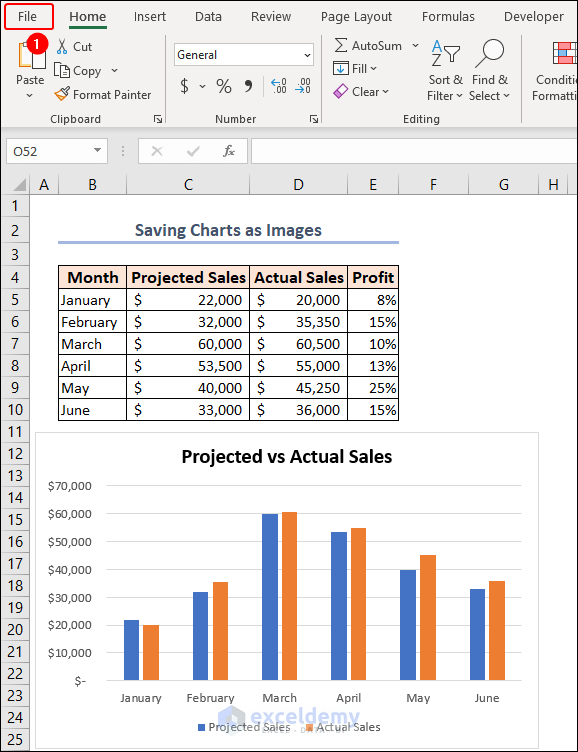
- Go to the File tab.
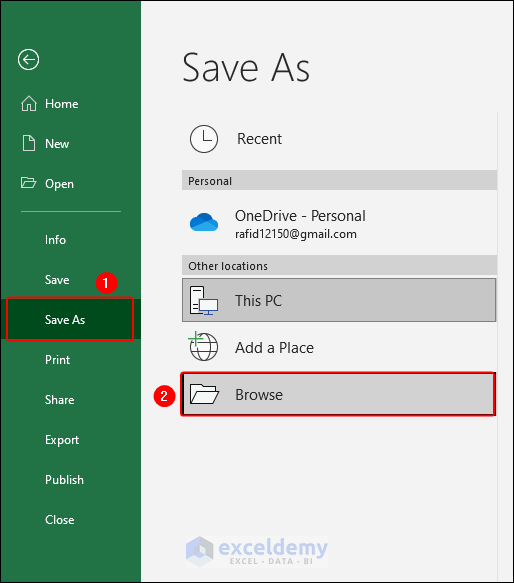
- Then, click on Save As >> Browse.
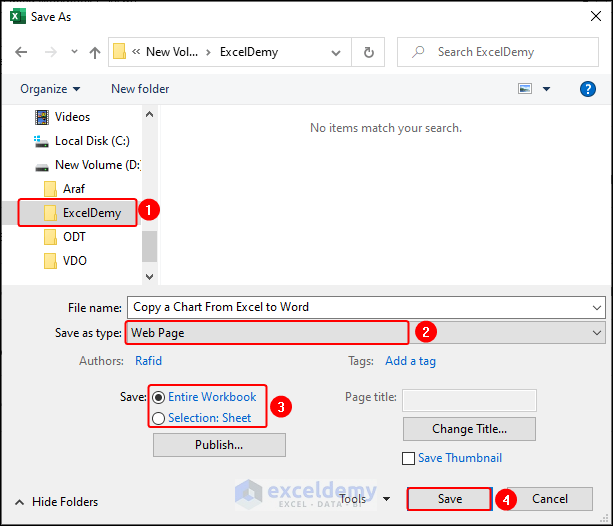
In the Save As dialog box, select ExcelDemy as the preferred location folder, choose Web Page as Save as type and click on Save.
Excel will show a warning message, Just click on Yes here.

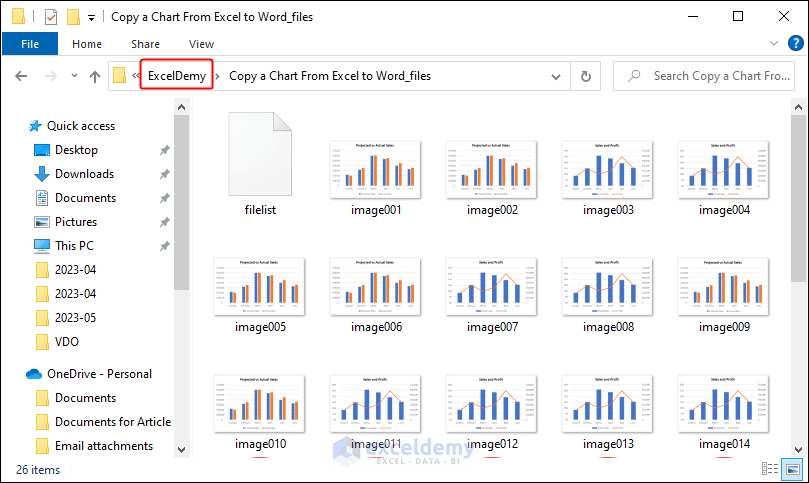
In the ExcelDemy folder, you can see all the charts saved as pictures and named serially.
How to Copy Excel Table into Word and Make It Fit
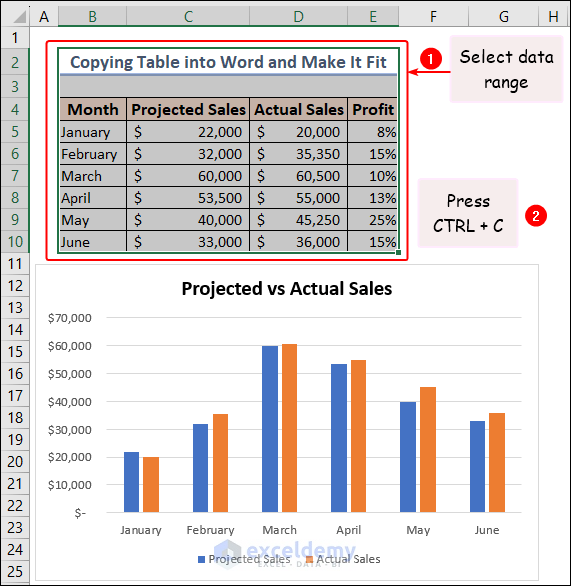
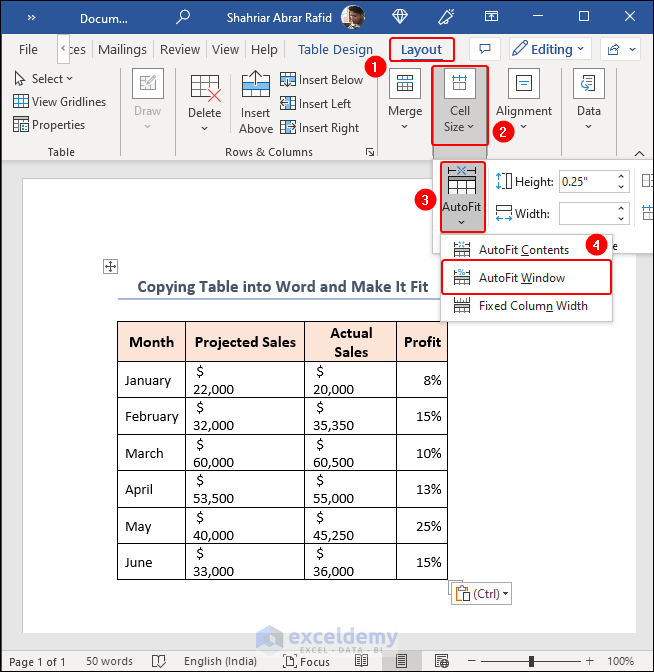
Our main task is to fit the table into the Word page after pasting an Excel table into Word. Because without fitting the table, it will be tough to use and look unpleasant.
- Firstly, select the data range in the B2:E10 range and press CTRL + C to copy the range.
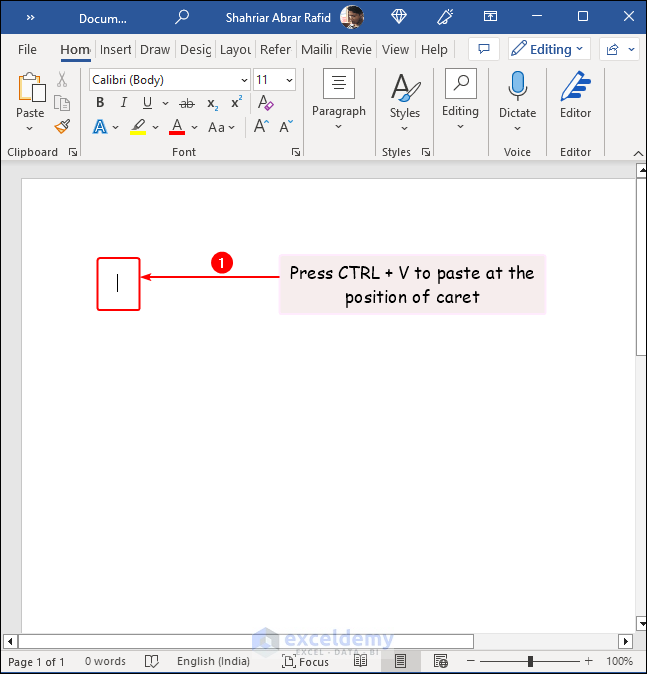
- Go to the Word app and press CTRL + V to paste the data at the position of caret.
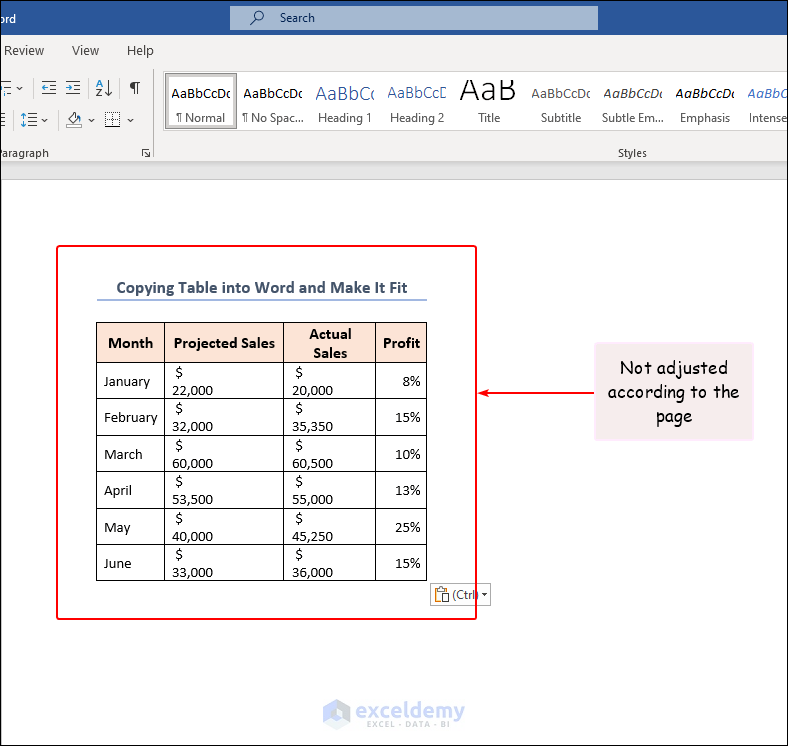
You can find the Excel data in the Word document. But it is not adjusted with the document’s page. So, the appearance is quite unappetizing.
To adjust it with the doc file,
- Click on Layout >> Cell Size >> AutoFit >> AutoFit Window.
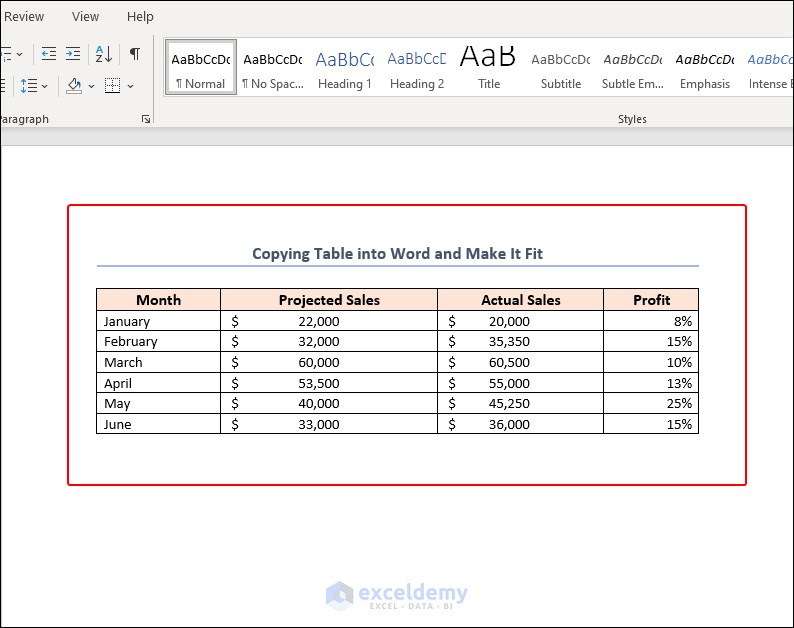
See how the data adjusts to fit the page of the document.
Things to Remember
- Copy the entire chart, including the title and axis labels, to ensure that the chart is fully functional and looks complete in Word.
- If you paste the chart as an embedded object, make sure to update the links between Excel and Word to keep the chart up-to-date.
- Avoid resizing the chart in Word, as it can distort the chart’s proportions and make it harder to read.
- If you need to make changes to the data, double-click on the chart to open it in Excel.
Frequently Asked Questions
1. Can I maintain data accuracy when copying a chart from Excel to Word?
Yes, when you copy a chart from Excel to Word, the data remains linked to the original Excel file. This means that if we make any changes to the data in the Excel file, it will automatically reflect in the chart in Word for ensuring data accuracy.
2. What are the benefits of copying a chart from Excel to Word?
The benefits of copying a chart from Excel to Word include presenting data in a visually appealing manner, saving time, maintaining data accuracy, and customizing charts to create professional-looking documents.
3. Is it possible to update a chart in Word that was copied from Excel?
Yes, charts copied from Excel to Word are linked to the original Excel file, so any changes made to the data in the Excel file will automatically be reflected in the chart in Word.
4. Are there any limitations to copying a chart from Excel to Word?
One limitation of copying a chart from Excel to Word is that if we delete the original Excel file or move it, the chart in Word may not update. Additionally, Word may not support some advanced chart features.
Download Practice Workbook
Download this practice workbook to exercise while you are reading this article.
Conclusion
In conclusion, copying a chart from Excel to Word is an effective way to present data, save time, maintain data accuracy, and customize charts. It’s a simple process that allows you to retain all the customizations made in Excel, ensuring a professional-looking document.
By following the methods outlined, you can easily learn how to copy a chart from Excel to Word to create visually appealing reports and presentations. This technique is especially useful for those who work with data and want to create polished documents that accurately represent their findings.
You are most welcome to give feedback about this reference. Feel free to comment if you have any questions or queries. Happy Excelling.
Related Articles
- How to Extract Data from Excel to Word
- How to Copy and Paste from Excel to Word Without Cells
- How to Insert an Excel Spreadsheet into Word
- How to Copy Only Text from Excel to Word
- How to Link Excel Cell to Word for Automatic Update
<< Go Back to Export Excel to Word | Export Data from Excel | Learn Excel
Get FREE Advanced Excel Exercises with Solutions!